
Most people plan the Ganga Aarti the way they plan a film show: reach on time, find a seat, and hope for the best. Varanasi doesn’t work that way. Where you sit, what time you reach, and even the season change what you see.
This blog is about the small things that make a Ganga Aarti boat ride Varanasi evening better, and none of it is the usual list of ghats and prices. We’ll look at what the priests actually do, how to choose your spot, what to do when the main ghat is too crowded, and what an evening boat ride Varanasi plan can look like. It comes from the team at Kashi Ghoomo, written in plain words.
What the Priests Actually Do, in the Order You’ll See It
The Aarti looks like one big blur of fire and bells, but it follows steps. Once you know them, you feel closer to it. The exact order can vary, but you’ll usually see this:
- A conch is blown to open the ritual. The sound of it is loud over the crowd.
- The incense is fanned out, gently at first, then in circles.
- High and low, big multi-tiered brass lamps are raised and carried in circles.
- A peacock-feather fan and a yak-hair whisk. They symbolize "purity," the venerable custom of welcoming visitors.
- A camphor flame is next. The bells toll more vigorously, and the japa gets only more intense.
- Then it stops. People fold their hands, and the river goes quiet again.
A line of young priests in saffron perform it on raised platforms, standing with their faces towards the river. The Aarti is an offering to the Ganga, not a show for the crowd. That’s why a Ganga Aarti boat ride Varanasi evening feels different from watching from the steps: from the water, you’re in front of the priests, not behind them.
Where Should You Sit for the Aarti? It Depends on Who You Are
Everyone asks for the best seat for Aarti, and the honest answer is that it depends on who’s sitting. Here's a simple way to decide.
Photographers: a boat a few rows back, where you can see all the lamps and the glow on the water without the heat & smoke.
Families with children: Select a boat with comfortable seating and life jackets. So everyone stays safe and reaches the destination safely.
Elders: “A boat with a nice backrest and a comfortable seat so no one has to stand for an hour for Aarti.”
Devotees: Chanting devotees, gather round the ghat and walk on the same to the very end so that you can follow each and every word. Get there in time.
Couples and quiet-seekers: A boat just off to the side, away from the loudspeakers.
The first timers usually are happiest on the water because the whole scene can be squeezed into one shot. That’s the main reason people choose a Ganga Aarti boat ride Varanasi over a spot on the steps.
Choosing Your Spot on the Water: Rows, Decks, and Distance
Once you’re on a boat, the best seat for Aarti isn’t just a good seat. The place where the boat is parked matters just as much.
- Not the first row. You’ll feel the heat and smoke, and you’ll block the view for everyone behind you.
- Not the very back. Otherwise you’ll mostly be watching other boats’ roofs.
- The second or third row. Usually the sweet spot, with a clear view over the front boats and some breathing room.
- The upper deck of a bajra. If your boat has two decks, the top one gives the best view over everyone else.
- A little gap from the ghat. If you’re too close to the steps, you’ll see mostly people’s backs. A bit of distance shows the full line of lamps.
The boatman makes the final call because the river fills up fast. Tell him what kind of view you want before the ceremony begins. A good evening boat ride Varanasi plan should leave a little extra time for this.
Three Ways to Plan the Evening
There’s more than one way to build an evening boat ride Varanasi plan. Pick the style that suits you.
Plan 1: sunset first, Aarti second. Board about an hour before the Aarti and drift past the ghats while the light fades. Then settle near Dashashwamedh. Best for first-timers and photographers.
Plan 2: Aarti only. Reach just before the ceremony, stay for it, then head back. It’s shorter, simpler, and kinder to small children.
Plan 3: Aarti first, quiet river later. Stay through the Aarti, then let the boat drift away from the crowd when it ends. The ghats are lit, and the water is calm. A good choice for couples and anyone who likes quiet.
Ask Kashi Ghoomo to adjust the timing to suit whichever package you want to choose, so mention it at the start. A Ganga Aarti boat ride Varanasi evening usually works better when it’s built around one of these three, instead of trying to squeeze everything in.
Aarti Timings Through the Year
The Aarti starts after sunset, so the clock time moves with the seasons. This is a rough guide, so please confirm on the day.
Winter (November – February): 6 p.m. Darkness strikes early, and you'll get cold quick, so be sure to layer up.
Summer (March to October): 7 pm. In the evenings, it is warm, and the heat can be felt on the ghats.
How long it lasts: about 45 minutes
In winter you may need to arrive on the boat by 4:30 pm to secure a good place; in summer you can arrive later. No matter the time of year, the best position for Ganga Aarti will always be with the early birds on a boat or on a step. Find out when you should book your Ganga Aarti boat ride Varanasi evening, as times vary by season.
The First Hour After Sunset: What the River Looks Like
Most people only think about the Aarti. But the hour before it is its own show. The sky turns from orange to purple, and the first lamps appear on the steps one by one. The water changes from gold to dark glass. Flocks of birds return to their home over the river.
You can enjoy your evening from the Varanasi night boat ride along the ghats, with the temple bells, voices, and the plop of the oars all blended. Up ahead, you will see the glow from Manikarnika, which is unlike anything else. It's where people grieve, so photography should stay aside for this.
At the Aarti precinct, the engine is turned off, and here is the actual sound of the ritual. Perhaps the best memory of the hour is the time spent on the water for many visitors. It’s what a Ganga Aarti boat ride and a Varanasi trip give you that the steps can’t.
If Dashashwamedh Feels Too Crowded: Another Aarti to Try
Dashashwamedh is the biggest Aarti, but it isn’t the only one. Assi Ghat, at the southern end of the river, has its own evening Ganga Aarti. It’s usually smaller and calmer, with seating on the steps. Think of it as your plan B if:
- You're travelling with elders and want fewer crowds.
- You're nervous about a big, packed ghat.
- You've already seen Dashashwamedh and want a different mood.
The smaller crowd also makes the best seat for Aarti easier to get at Assi. Ask your boatman or guide which aarti suits your evening.
When the River Rises: How the Aarti Changes in the Monsoon
What happens: from July to September, the Ganga can rise over the lower steps. When the water is very high, the platforms can go under. The Aarti has been performed from the higher stages of the temple roofs at such hours. Boat rides can be cancelled when the river level is high and the conditions are unsafe.
A Ganga Aarti boat ride Varanasi evening in the monsoon is one that we may need to adapt to the weather at short notice. We'd recommend remaining flexible and confirming with the boat team on the day. If boats aren’t running, the best seat for Aarti is usually from the higher steps or a rooftop.
Which Kashi Ghoomo Boat Suits the Aarti?
Kashi Ghoomo has a few boat styles on its website, and each suits the Aarti in a different way:
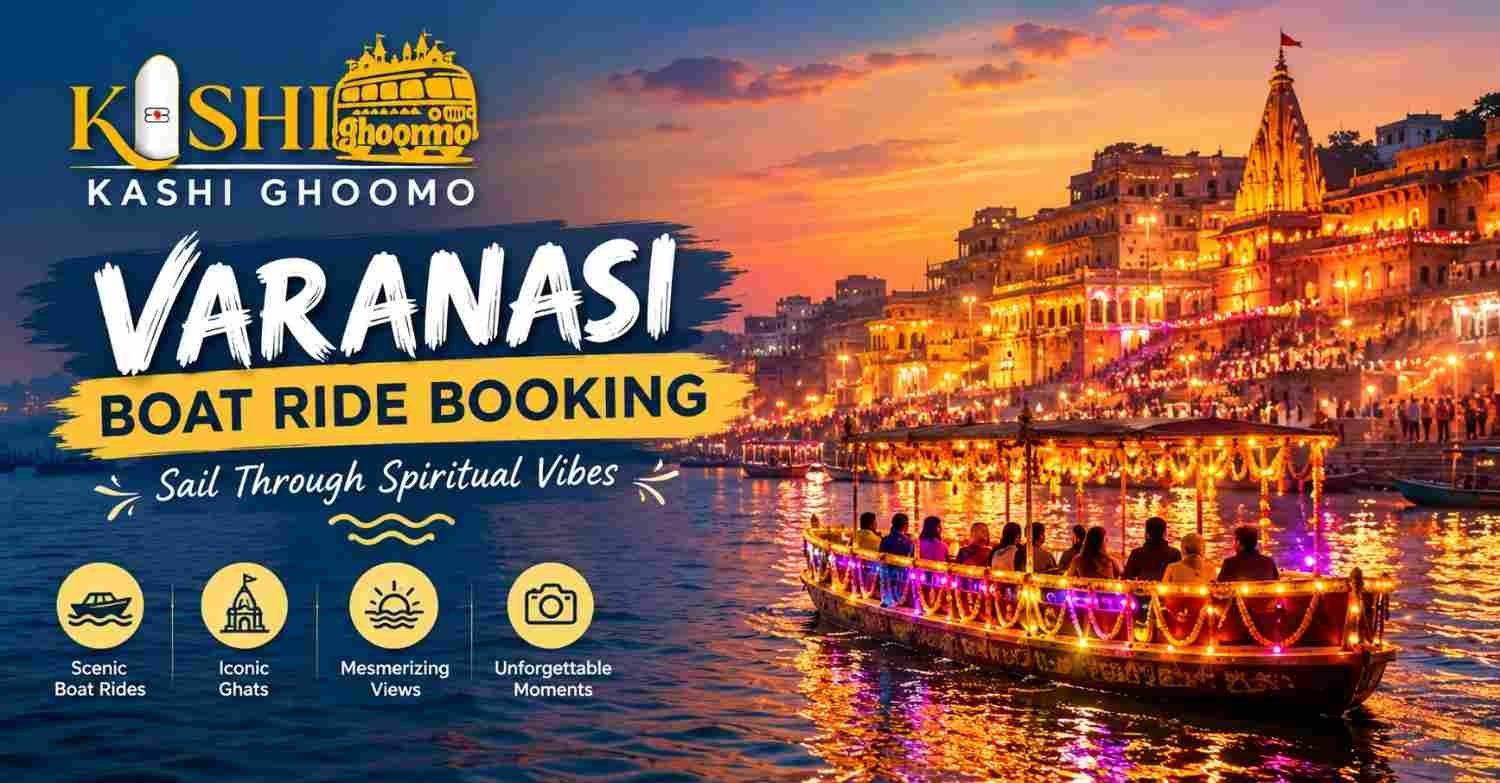
Lighting decorated boat: an evening motor boat with lights, built around the Aarti, for about 2 hours 30 minutes. Good for celebrations and photos.
Motorboat: a simple private option for a small group, also around 2 hours 30 minutes.
Bajra: a larger boat for 3 to 4 hours, better for big families. A double-decker gives you the upper deck.
Dashashwamedh Ghat tour: a one-day package with temples and old lanes first, and the boat and reserved Aarti seating (subject to availability) in the evening.
If you’re choosing an evening boat ride Varanasi option for the first time, the lighting-decorated boat is an easy fit, because it’s planned around the ceremony. And when you tell Kashi Ghoomo how you’d like to watch, the team can suggest the best seat for Aarti for your group.
Small Safety Things Nobody Mentions
Fire, smoke, and crowds are all part of the Aarti. A few simple habits keep it safe:
- Keep flames, camphor, and diyas away from your life jacket. Some life jackets can burn or melt.
- Ask for lighting a diya from the boatsman and make sure it’s a leaf cup, not a plastic one.
- Cover your nose and mouth with a scarf if the smoke drifts your way.
- Keep young children a little further back, because the conch and the bells are loud.
- Stay seated whenever the boat rocks, as it will when others move around.
None of this spoils the experience. It just lets you enjoy a Ganga Aarti boat ride Varanasi evening without worry. If you’re planning an evening boat ride Varanasi trip with children or elders, tell the boat team in advance.
Frequently Asked Questions (FAQs)
1. How long is a Ganga Aarti boat ride Varanasi trip?
Usually two to three hours, with the sail and the Aarti together. On the Kashi Ghoomo website, the motorboat and the decorated boat are listed at around 2 hours 30 minutes.
2. Which is the best seat for Aarti if I’m on a boat?
A few rows back from the ghats, with a little gap. Tell the boatman what you’d like to see before the ceremony starts.
3. What time does an evening boat ride Varanasi start?
Usually 45 to 60 minutes before the Aarti, so about 5 pm in winter and a little later in summer. To get a better position, come earlier. Confirm the time with the boat team.
4. Is the Aarti held every day?
Yes. The timing or the place can change when the river is high or on very big festival nights.
5. Is it safe for children and elders?
Yes, you must follow the boat team instructions, and life jackets are available. Keep your seat, and inform your team at the time of booking.